
Holy Days
All Saints Day
November 1: one day for every saint in heaven — the famous, the forgotten, and the ones only God can name.
Listen above, or read the story right here — same story, your choice.
The Basics
- Feast day: November 1.
- The day honors: all the saints in heaven, known and unknown — including those who have no feast day of their own.
- Rank: a solemnity, and a holy day of obligation. In 2026 it falls on a Sunday, and it is kept as that Sunday.
- Older names: All Hallows' Day. The night before it, October 31, is All Hallows' Eve.
- First kept in Rome: May 13, in the early 600s, when the Pantheon became a church.
- Moved to November 1: by Pope Gregory III, and given to the whole Church by Gregory IV in 837.
A day for the saints nobody knows
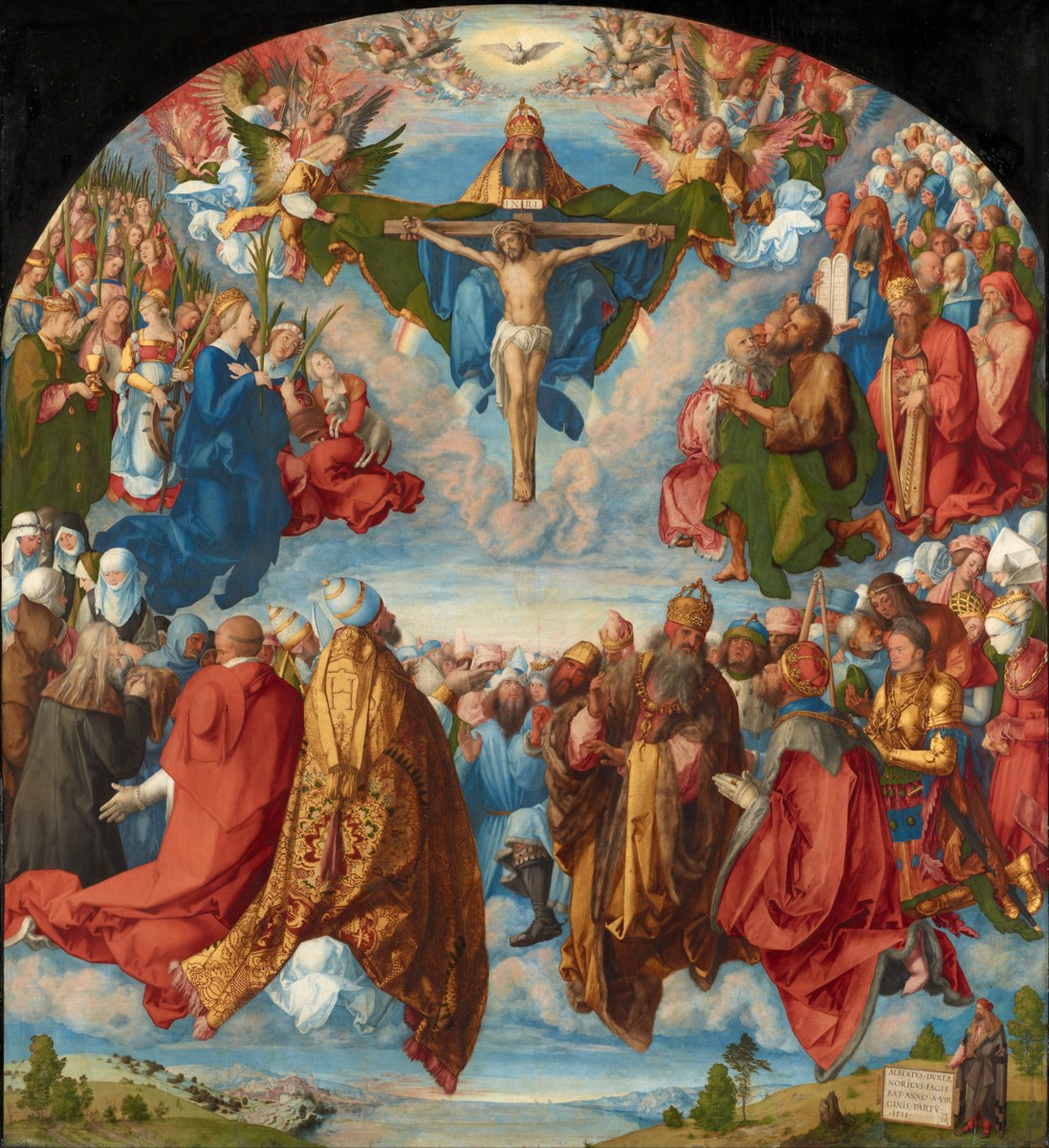
For every saint whose name fills a calendar square, there are thousands more in heaven whose names were never written down anywhere on earth. Grandmothers who prayed their families through hard years. Martyrs in far places whose deaths no one recorded. Ordinary people who loved God quietly, in small towns and farmhouses and hospital wards, and died with no one outside their own street the wiser. The Church has always believed they are there — Scripture calls them a great multitude that no one could count. On November 1, she gives them a day of their own: all of them together, the famous and the forgotten, in one great feast called All Saints.
Too many martyrs for the calendar
The feast begins with the martyrs. In the early Church, Christians kept the anniversary of a martyr's death the way we keep a birthday — gathering at the grave, telling the story, giving thanks. It was a beautiful custom, and it worked while the martyrs were few enough to count.
Then came the persecution under the emperor Diocletian, the last and fiercest of all, in the early 300s. The martyrs became so many, in so many places, that the custom broke under their number: there were not enough days in the year to give each one his own. So the Church did the only thing love could think of. She appointed one common day for all of them — a single feast on which every martyr, named and unnamed, would be remembered together, and none of them left out.
A temple becomes a church
The feast's first firm foothold stands in Rome, and you can still walk into it. The Pantheon, the great domed temple built for Rome's pagan gods, stood in the city's heart for six centuries. Then, on May 13 — in 609 or 610 — Pope Boniface IV consecrated it as a church, honoring the Blessed Virgin Mary and all the martyrs, and ordered that the day be kept every year. A temple raised to every god became a church honoring the one God and His witnesses, and the feast of the martyrs had a home and a date. For the time being, that date stayed in spring.
How the feast found November 1
A century later the feast grew wider. Pope Gregory III, who reigned from 731 to 741, consecrated a chapel in Saint Peter's Basilica in honor of all the saints — not the martyrs only, but every saint in heaven — and he fixed its anniversary on November 1. Then, in 837, Pope Gregory IV extended that November 1 celebration to the entire Church, and there it has stayed ever since.
Pope Urban IV, explaining the day, gave the reason it still matters. The solemnity honors all the saints, known and unknown, together — and it makes up for anything that fell short in how we kept their separate feasts through the year. No gaps. Nobody missed. That is the whole point of the day: in a Church that keeps hundreds of feast days, this one exists so that not a single saint goes unhonored — least of all the ones only God can name.
So November 1 is the Church on earth turning her face toward the Church in heaven: a multitude no one can count, and every one of them remembered.
All you saints of God, pray for us.