
Holy Days
All Souls Day
November 2: the day the Church prays for her dead — by name, every name, all November long.
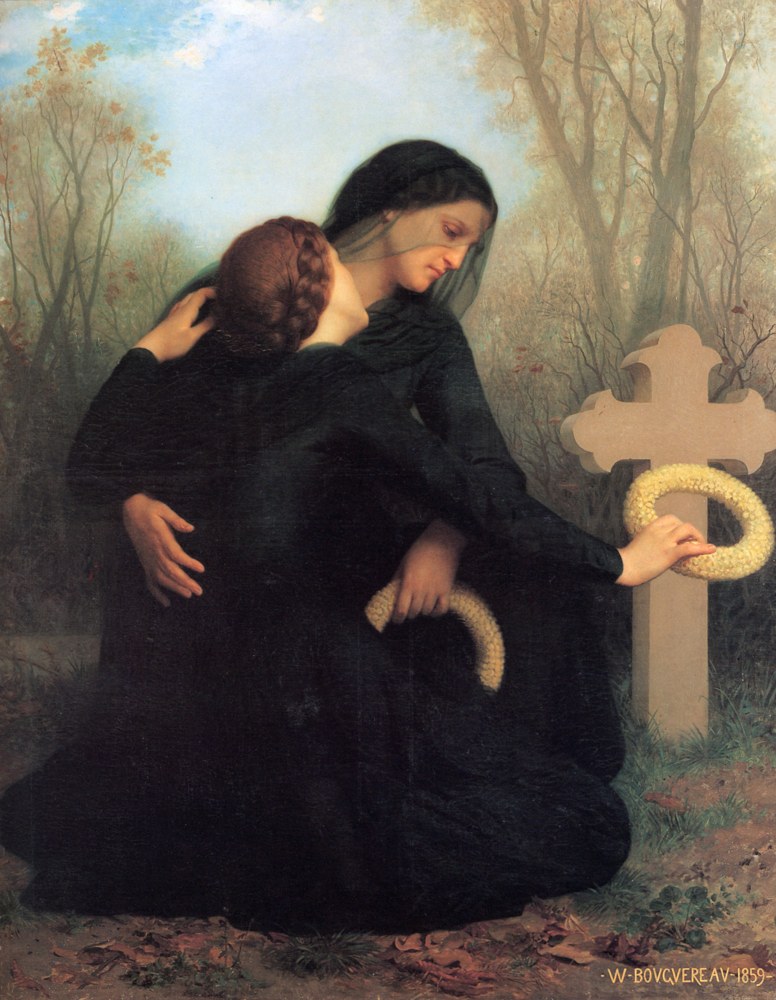
Listen above, or read the story right here — same story, your choice.
The Basics
- Day: November 2, the day after All Saints.
- Full name: The Commemoration of All the Faithful Departed.
- What it is: a day of prayer for all who died in God's grace — especially the souls in purgatory, being purified before the vision of God.
- Rank: a commemoration. It is not a holy day of obligation.
- Set on November 2: by Saint Odilo of Cluny, in 998.
- The month: all of November is traditionally given to prayer for the departed.
The other half of the weekend
All Saints and All Souls stand back to back, and they belong together. On November 1 the Church honors the saints in heaven. On November 2 she turns to everyone who has died in God's grace and is still being made ready for heaven — the souls in purgatory. The old way of saying it names one Church in three places: the Church in heaven, the Church being purified, and the Church on earth, still praying. All Souls Day is the day the Church on earth spends on the middle one — the people we have loved and buried, prayed for by name.
Older than the day itself
Praying for the dead is not something the Church invented one November. She has done it from the beginning. Its roots run back to the Old Testament, to the book of Second Maccabees, where prayer and sacrifice are offered for soldiers who had fallen — Scripture calls it a holy and good thing, done in hope of the resurrection. The Catechism traces the same practice through the early Church: Christians prayed for their dead because they believed the dead could be helped by it, and that death had not cut them off from one another.
What the early Church did not have was a single day for it. That came later, and it came from a monastery.
The abbot of Cluny
In 998, Saint Odilo, abbot of Cluny in France, set November 2 — the day immediately after All Saints — as a day of prayer for all the faithful departed. Cluny was then the center of the largest network of monasteries in Europe, hundreds of houses living under its rule, and Odilo ordered the day kept in every one of them: Masses, prayers, and alms for the dead.
Peter Damian, in his Life of Saint Odilo, tells the story behind the abbot's decision. A pilgrim returning from the Holy Land was shipwrecked and cast onto a rocky island, where a hermit told him something strange: that the prayers of the faithful — and above all the prayers of the monks of Cluny — were rescuing souls from purgatory, and that the demons raged about it. The pilgrim carried the report home to Odilo, and the abbot set the day. That is the traditional account, told the way Peter Damian recorded it.
How the day spread, and how it is kept
From Cluny the observance traveled outward — to other Benedictine and Carthusian monasteries, into the dioceses of France, and through the Western Church — until Rome accepted it in the fourteenth century and fixed November 2 as the commemoration for the whole Church.
It is kept the way it began: with names. Masses are offered for the dead. Families visit cemeteries and tend graves. Through November, parishes keep a Book of Remembrance near the altar, where the names of loved ones are written to be prayed for all month. And on November 2 itself, the Church grants a plenary indulgence that can be gained for the dead — by visiting a church and praying the Our Father and the Creed, under the usual conditions. One day's prayer, given away entirely to someone who can no longer pray for himself. That is the shape of the day.
“Remember me at the altar”
Saint Monica, dying far from home, asked only one thing of her son. She did not ask Augustine to bring her body back to Africa, or to bury her beside her husband. “Only this I ask of you,” she told him: that he remember her at the altar of the Lord. It is the oldest instinct of this feast, spoken by a mother to her son: when I am gone, do not stop. Remember me where the praying happens.
All Souls Day is the whole Church keeping that request — for Monica, and for every name in every Book of Remembrance, and for the dead nobody on earth remembers anymore. Nobody is prayed for anonymously, and nobody is left out.
Eternal rest grant unto them, O Lord, and let perpetual light shine upon them. May they rest in peace. Amen.