Why Catholics Do That
Why the Advent Wreath?
In late November, a circle of evergreen branches appears in Catholic churches — and on a lot of Catholic kitchen tables — holding four candles. On the first Sunday of Advent, only one candle is lit. A week later there are two. Why count down to Christmas this way, one small flame at a time?
The Short Answer
Because Advent is a season of waiting, and the wreath makes the waiting visible. Its round shape, with no beginning and no end, stands for God, who is eternal. Its evergreen branches stay green in the dead of winter, a sign of the life Christ brings that does not die. And its candles are a countdown in light: one more is lit each Sunday, because the day is getting closer and the Light is coming into the darkness, week by week, until Christmas.
The human moment
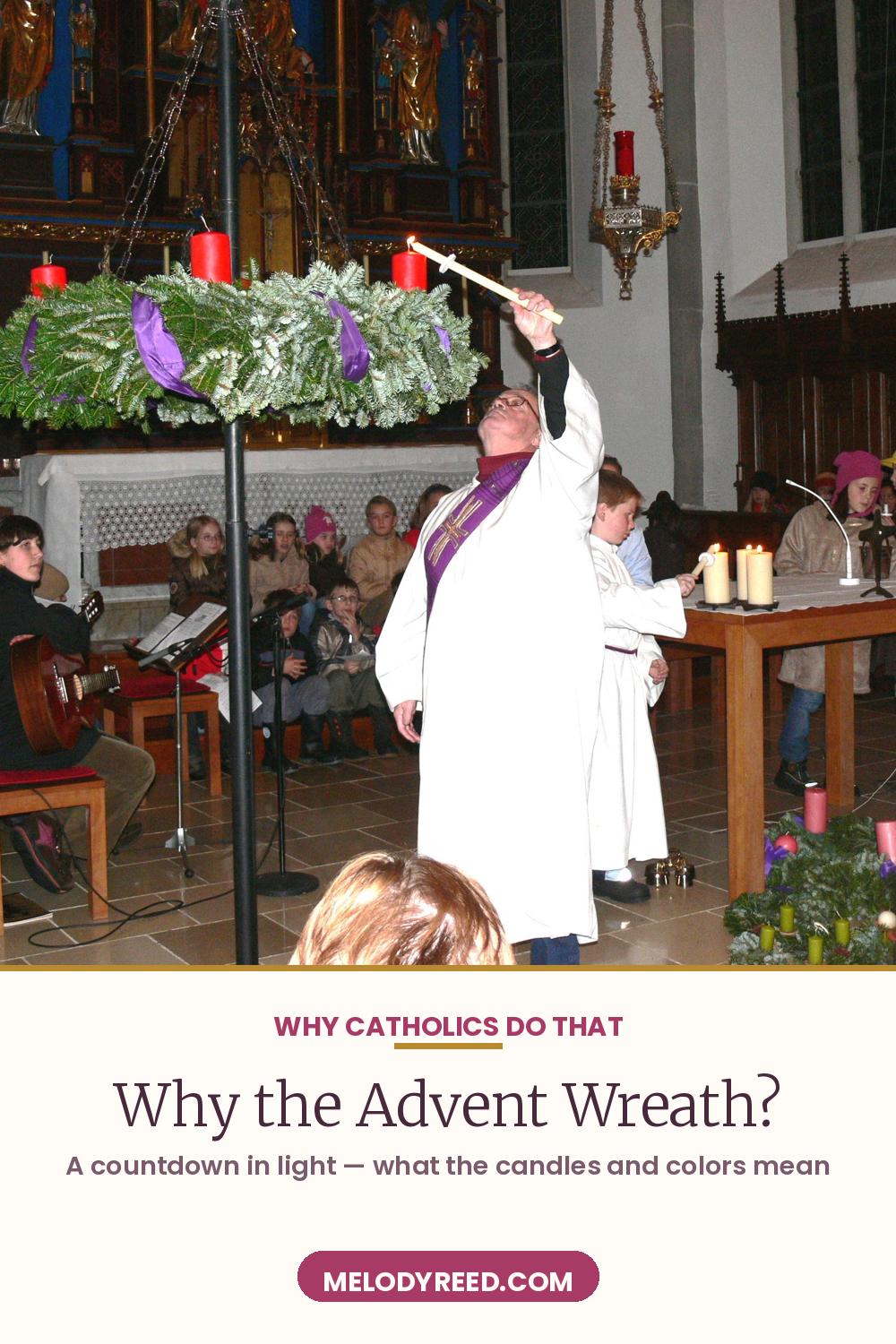
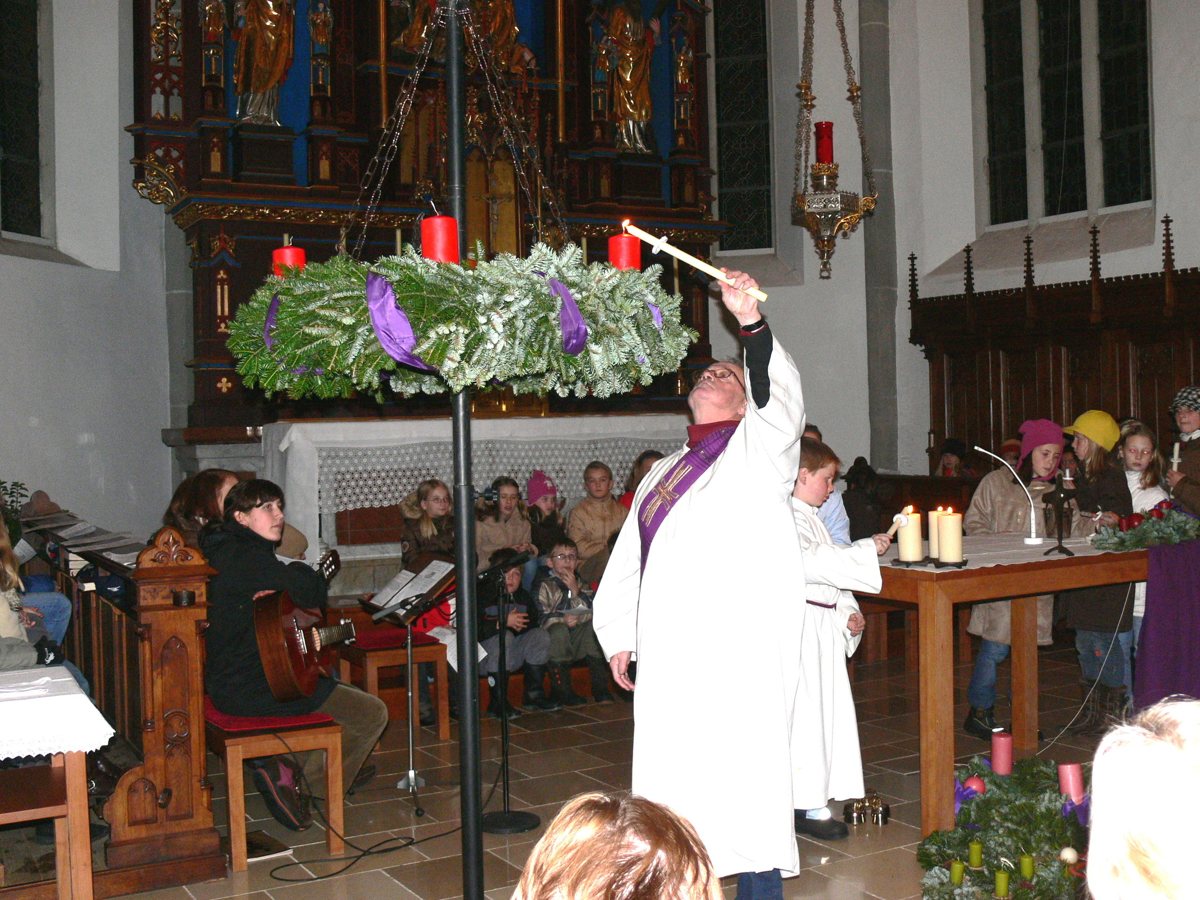
Picture the first Sunday of Advent. The church is a little dimmer than usual. The purple cloth is on the altar, and up front stands the wreath — four candles in a ring of green, three purple and one pink, none of them lit yet. After the blessing, one flame catches. Just one. It looks small against the whole dark church, and that is exactly the point. Or picture the same moment at home, around a supper table, where a child is the one asking the question this whole custom was invented to answer: "How much longer until Christmas?" The wreath answers her — not with a number, but with a light that grows.
Where it comes from
Evergreen wreaths are old — people in the dark winters of northern Europe were hanging circles of green and setting candles in them long before anyone called it an Advent wreath, a reminder in the coldest weeks that life and light would come back. But the Advent wreath as we know it has a birthday. In 1839, in Hamburg, Germany, a Lutheran pastor named Johann Hinrich Wichern ran a mission school for poor children, and every December the children asked him the same question, day after day: when is Christmas coming? So he took a wooden cart wheel, set candles all around it — large white ones for the Sundays and small red ones for the days in between — and lit one more each day. The children could see Christmas coming.
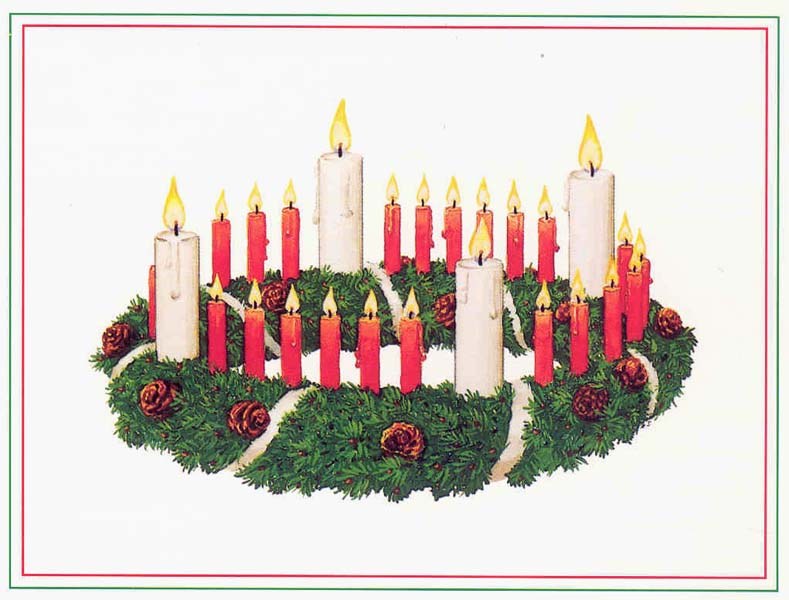
The wheel was eventually trimmed down to the four Sunday candles, the custom spread through Germany, and Catholic families and parishes took it up in the early 1900s. It crossed the ocean and became a fixture of Catholic Advent in America by the middle of the last century. It began in a Protestant schoolroom, and Catholics loved it and made it their own — which fits, because the waiting it teaches belongs to every Christian.
What Catholics actually believe
The wreath preaches a small sermon without saying a word. The circle has no beginning and no end, like God himself. The evergreen does not turn brown when everything else dies back — a picture of the everlasting life Jesus brings. The candles stand for Christ, the Light of the world, and the way his coming is told in the Gospel: "The light shines in the darkness, and the darkness has not overcome it." Notice that the light does not arrive all at once. It grows — one candle the first week, two the second — because that is how God came: promised, waited for, and then, at last, here.
The colors preach too. Three candles are purple, the color of preparation and of a king's robe: we are getting ready for someone important. The pink one is lit on the third Sunday, called Gaudete Sunday, from the Latin word for "rejoice" in that day's Mass readings: "Rejoice in the Lord always." More than halfway through the waiting, the Church lets the joy break through.
In many homes the four candles are given names as they're lit: Hope, for the prophets who foretold him; Faith, for the road to Bethlehem; Joy, for the shepherds; and Love, for the angels' song. Some wreaths add a white candle in the center — the Christ candle — lit at last on Christmas Day.
What it looks like in ordinary life
In church, the wreath stands near the altar all through Advent, blessed on the first Sunday, with one more candle lit each week at Mass. At home, it usually lives on the table where the family eats. The candles are lit before supper — just the first one, that first week, while the days are shortest — and stay lit through the meal, sometimes with a short prayer, sometimes just there, glowing next to the meatloaf. Children take turns with the matches, and somebody has to be trusted with the snuffer. It is not a decoration that goes up once and gets dusted. It changes every week, on purpose, because the family is supposed to change with it — a little more ready, a little more expectant, one candle at a time.
Try it / pray it
Advent begins this Sunday. If there is a wreath in your home — or if you pick one up this week — bless it before the first candle is lit, using the Church's own blessing, and then light that single candle at supper each night of the first week. It takes thirty seconds, and it will slow December down in the best way.
Let's pray. In the name of the Father, and of the Son, and of the Holy Spirit. Amen.
O God, by whose word all things are sanctified, pour forth your blessing upon this wreath, and grant that we who use it may prepare our hearts for the coming of Christ and may receive from him abundant graces. Through Christ our Lord. Amen.
May God bless you and yours.
For the feasts and saints of the season, see the Calendar page — and find prayers for Advent and every day on the Prayers page.