Why Catholics Do That
Why Do Catholics Pray for the Dead?
A Catholic who has lost someone keeps praying for them — at Mass, in November, at the grave. Why? If they're gone, what can prayer still do?
The Short Answer
Because Catholics believe death ends a life, but it doesn't end the relationship — and it doesn't finish the person. Someone who dies in God's love may still be being made ready for heaven, and the prayers of the people who loved them can help them on that last part of the way. So Catholics pray for their dead the way you'd help someone you love carry something heavy: because they're yours, and because it does them good.
The human moment
It usually shows up at a funeral, or just after one. The prayers go on longer than expected — prayers for the person who died, by name, as if they could still receive anything. Or it shows up months later, at a quiet weekday Mass, when the priest reads out a name and a whole row of people bow their heads: a Mass being offered for someone's mother, a year after the burial. And the question rises, kindly meant or not: she's gone — why are we still praying for her? Doesn't God already know? Isn't it finished?
Catholic prayer for the dead says: it isn't finished. Not because God is undecided about her, but because she is still on the way — and love doesn't stop at the grave.
Where it comes from
This is one of the oldest things Christians do. Its roots reach back before the Church, into the Old Testament book of Second Maccabees. Judas Maccabeus, the Jewish commander, collected money and sent it to Jerusalem for a sin offering on behalf of his soldiers who had fallen in battle — men who had died, some of them, in sin. The book calls his thought "holy and pious," and says he acted "in view of the resurrection": if the dead were simply gone, praying for them would be pointless. (Second Maccabees is one of the books found in Catholic and Orthodox Bibles that Protestant Bibles leave out — one reason this practice puzzles some of our Protestant friends more than others.)
The first Christians kept it up. In the catacombs of Rome, where believers buried their dead during the persecutions, the tomb inscriptions ask peace and rest for the people laid there — prayers scratched into stone by the families who loved them. And the Church's teaching summary, the Catechism, puts it plainly: "From the beginning the Church has honored the memory of the dead and offered prayers in suffrage for them, above all the Eucharistic sacrifice." Suffrage is the old word for it — prayers and offerings made on behalf of someone else. This is Church teaching, taught and practiced from the earliest centuries, not a medieval invention and not just a custom.
What Catholics actually believe
Three things hold it together.
First: death is not the end of the story, and it isn't the end of the person. Catholics believe every person is judged at death — there is no second chance afterward, and prayer can't overturn that judgment or rescue someone who turned away from God for good. But judgment isn't the whole journey for everyone.
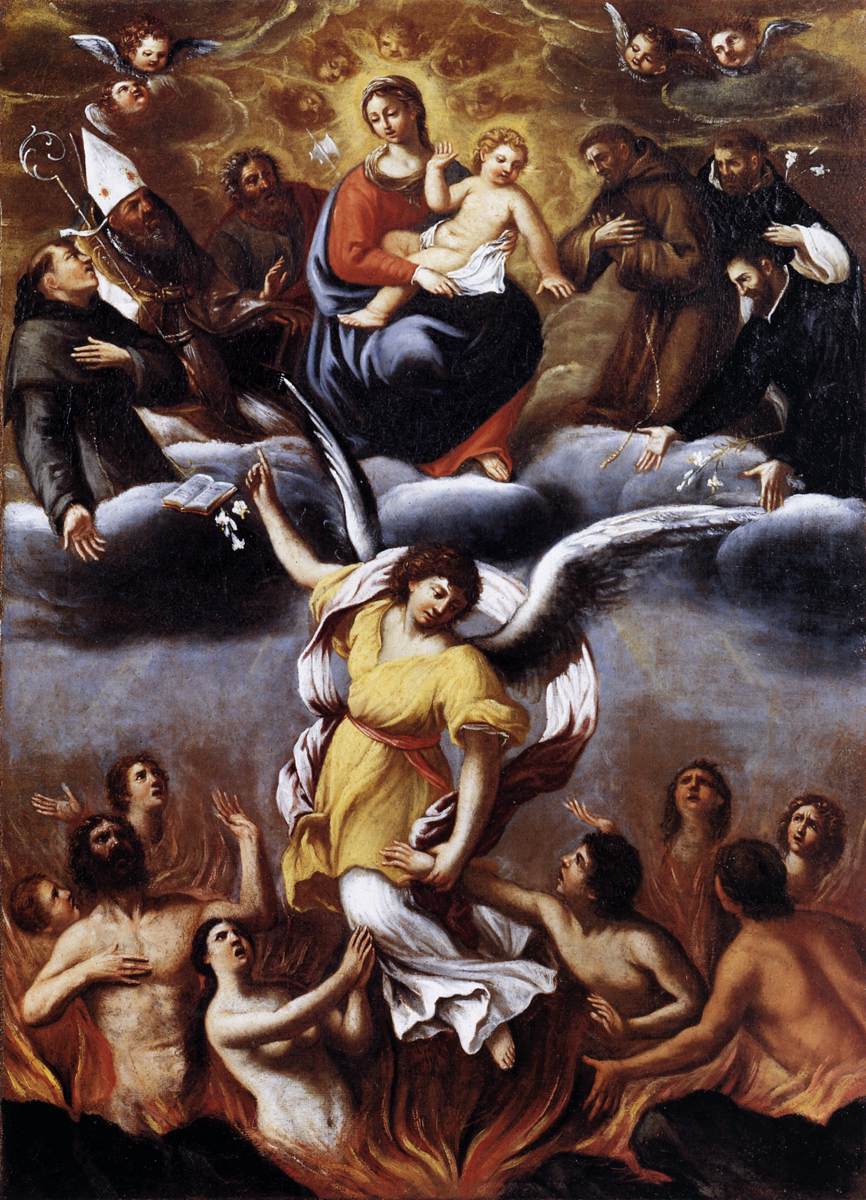
Second: there is purgatory. That's the word Catholics use for the state of being made fully ready for heaven — a purification, like being washed before a feast. The Catechism describes it as the final purification of people who die in God's grace and friendship but are not yet completely purified. Everyone in purgatory is saved — every one of them will see God. It isn't a second hell or a waiting room for the maybe-saved; it's more like the last stretch of the road home, walked by people who are already loved and already heaven-bound, being made fully ready for how bright heaven is.
Third: we are still connected. Catholics believe the Church is one family in three places — in heaven, on earth, and being purified — and that death doesn't cut the cord between them. And because the connection is real, help can travel along it. The souls being purified can no longer earn or strive for themselves, the way we still can. But we can pray for them, offer Masses for them, give alms in their name — and God, who willed the family to be one, receives those prayers as real help for them. Praying for the dead is even counted among the spiritual works of mercy, the Church's short list of the kindest things one person can do for another: pray for the living and the dead.
So the logic is simple, really. If she is in heaven, she needs nothing — and no prayer is wasted, because God receives it all as love. If she is still on the way, our prayers genuinely help her. Either way, praying for her is never pointless. It is love, still doing something.
What it looks like in ordinary life
It looks like an ordinary Tuesday. A woman arrives early to the morning Mass and sits in the third pew, the one she always sits in. Halfway through, among the prayers, the priest speaks her husband's name — the Mass is being offered for him, one year to the week after he died, because their daughter called the parish office in June and asked. Nobody makes a speech. The name is just there, spoken out loud in the middle of the Church's prayer, carried along with everyone else's offerings — and then the Mass goes on, and she goes home and makes tea. That is most of Catholic prayer for the dead: not grand, just faithful. A name, spoken. A person, remembered on purpose. All November it widens — books of remembrance by the altar, families out in cemeteries with flowers — but at its heart it stays that size: one name, prayed by people who refuse to stop loving someone just because he died.
Try it / pray it
Try it today. Think of one person you have lost — say their name out loud, and pray the Church's oldest prayer for the dead for them. It is short enough to learn by heart, and it is printed on the back of half the funeral cards in America. It is the whole practice in miniature: a name, a prayer, and the trust that God hears it and that it does them good.
Let's pray. In the name of the Father, and of the Son, and of the Holy Spirit. Amen.
Eternal rest grant unto them, O Lord,
and let perpetual light shine upon them.
May they rest in peace. Amen.
May God bless you and yours.
For the feast that prays for everyone still on the way, read All Souls Day — and find the Church's prayers for the dead on the Prayers page.